01 / CREW AI
One view of the roster
Current crew-planning interface with synthetic sample duties.
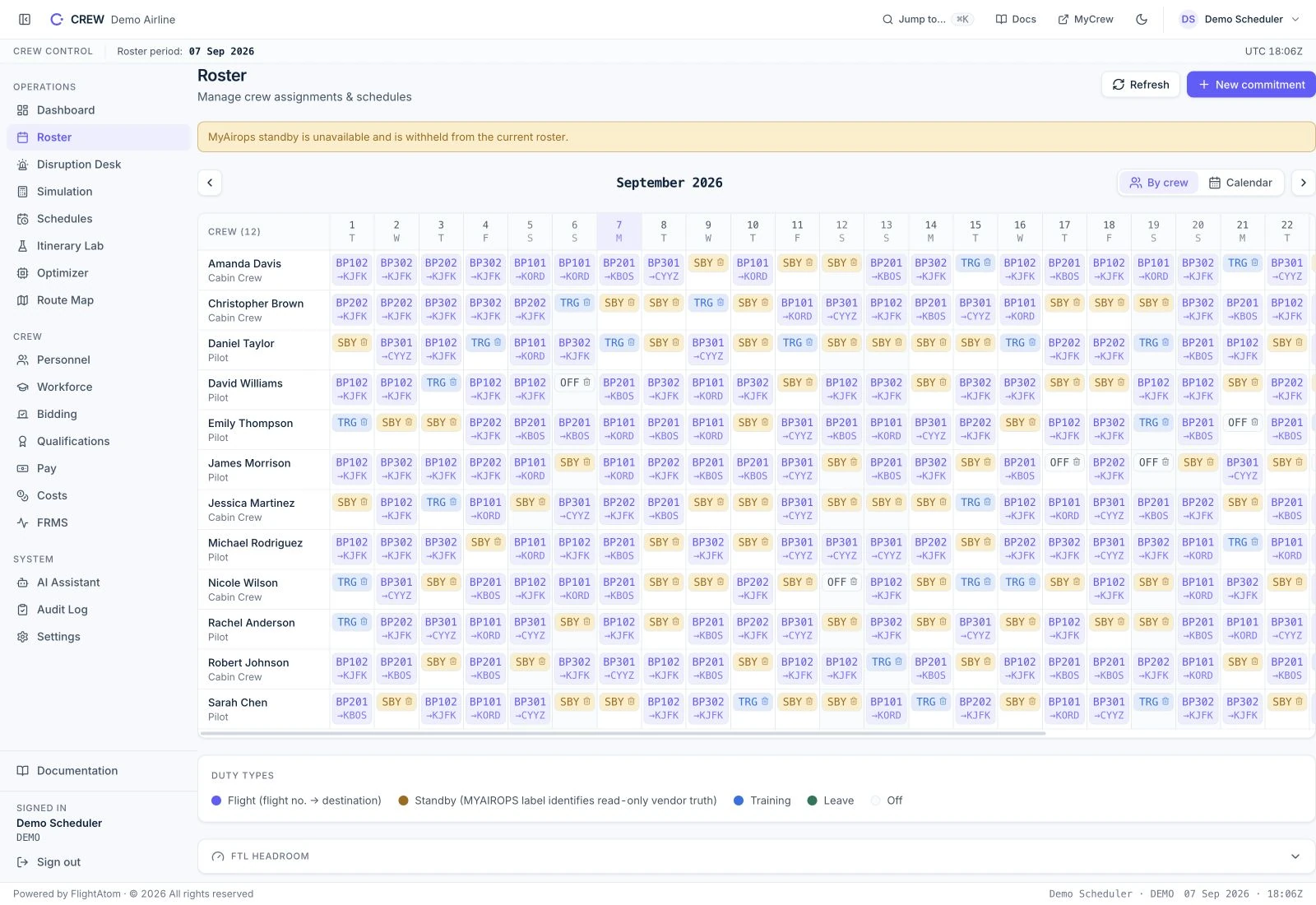
Bring crew planning, bidding, qualifications and disruption recovery into a connected operations workspace. Compare options with the evidence that matters, then validate the plan before publication.
Email me the brochure (PDF · 4.2 MB)An operational change affects planned duties. The planner needs an alternative that can be checked against current rules and crew records.
Review duties, crew records, and the operational change in the planning workspace.
Explore a planning or recovery proposal and inspect the resulting assignments and uncovered work.
Inspect coverage and any crew callouts, then use the Disruption Desk approval action to apply the reviewed option.
A reviewed recovery option applied to the roster, with the approval recorded.
The planner reviews coverage, confirms off-duty availability, and authorizes the roster change.
Explore the current product interface with demonstration data. Open any screenshot for a closer look.
Current crew-planning interface with synthetic sample duties.
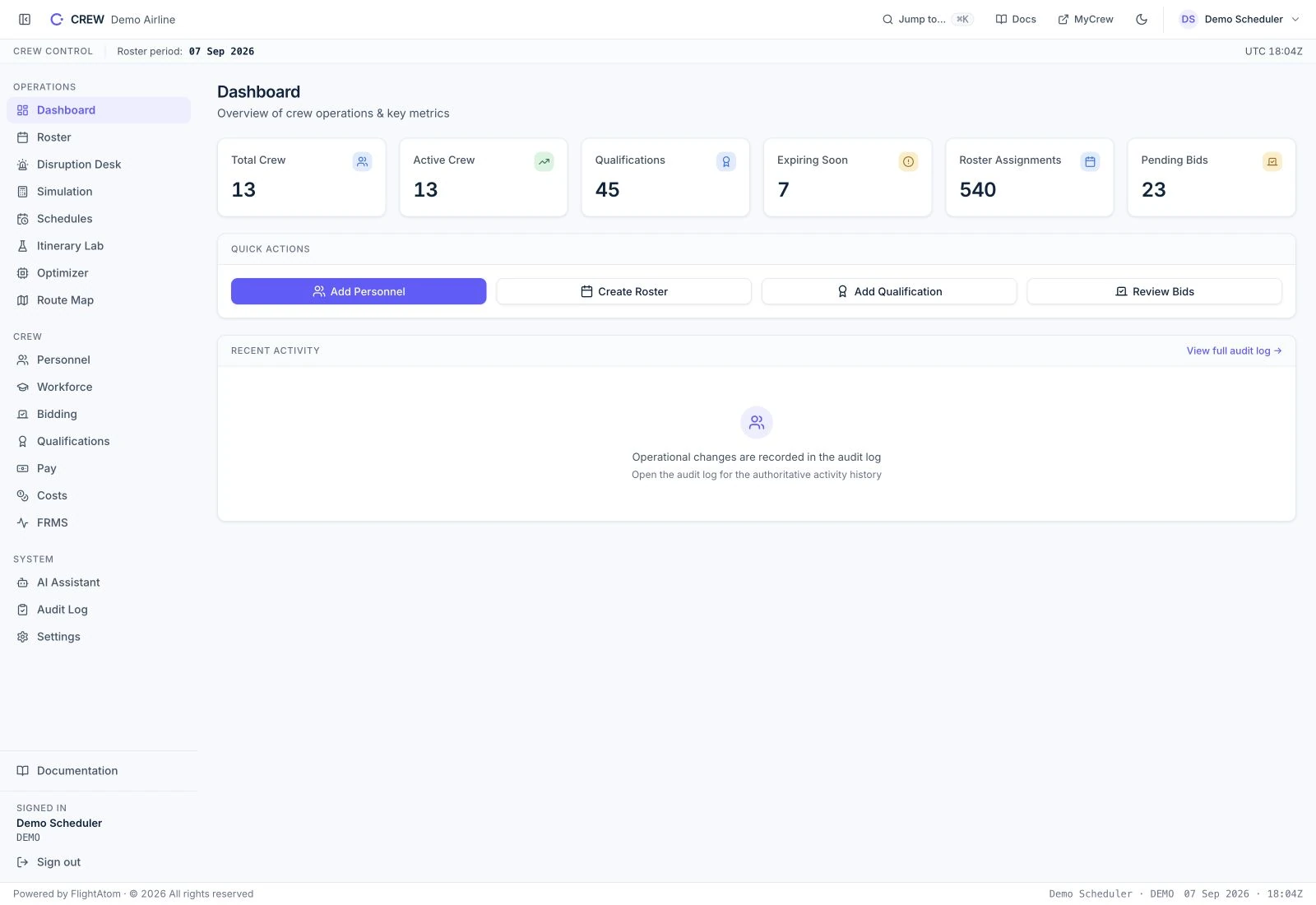
Crew, qualifications and roster activity in the current console.
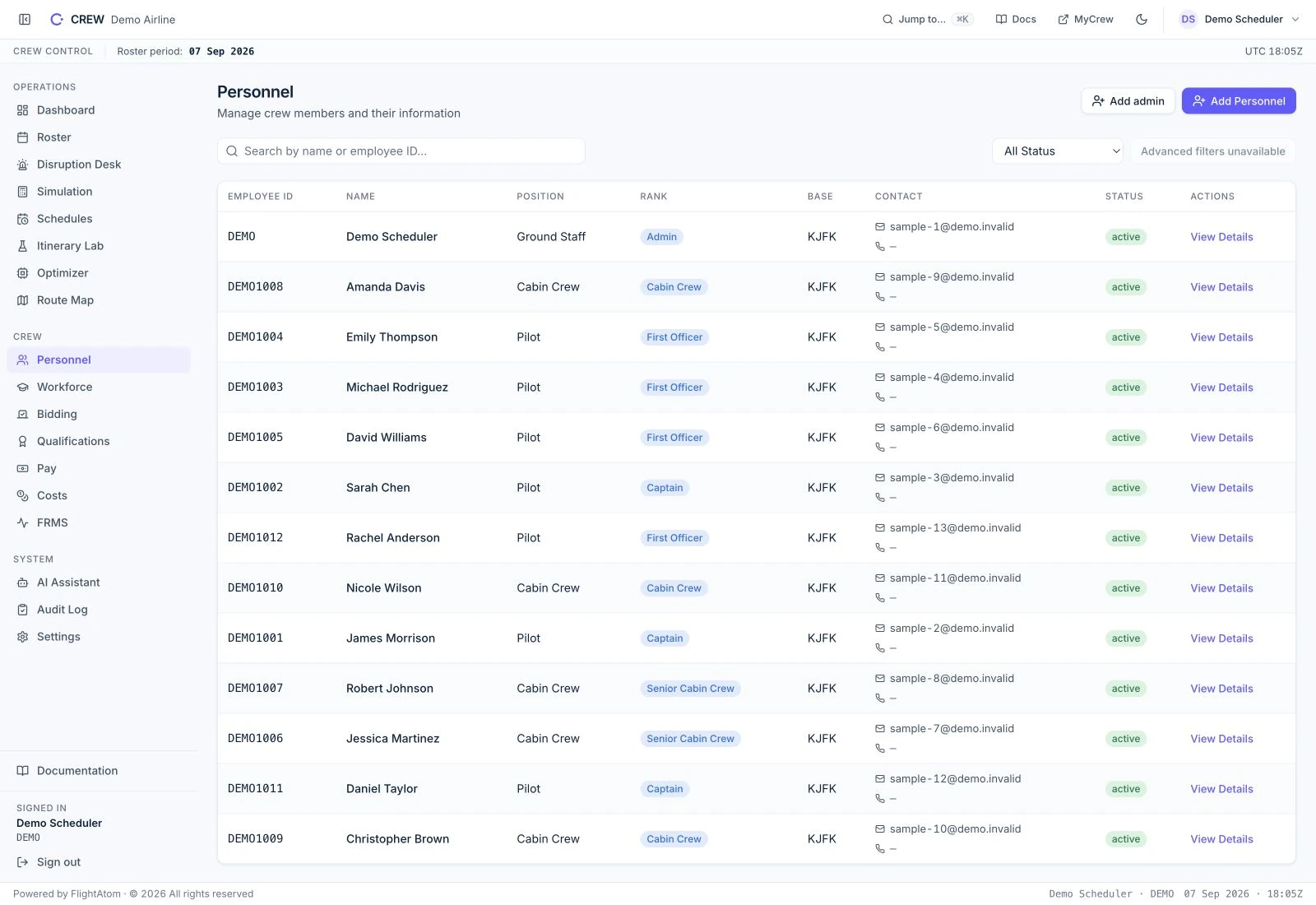
Crew roles, bases and profiles in the current console. Built-in synthetic sample data.
Crew planning, roster optimization and disruption recovery with controlled AI assistance.
Build and validate rosters through bidding and planning workflows, with duty constraints, qualifications, locked commitments and crew preferences.
Work affected duties and available crew through a recovery solve, inspect its legality and coverage, then review a proposed recovery before approval.
Expose missing, expired or unsupported credential evidence and inspect aircraft and route eligibility across a selected planning horizon.
Review flight duties, training, leave and manual commitments by crew or calendar, with vendor standby identified separately from local assignments.
Compare schedule demand, crew supply, leave and training constraints. Use simulation to explore staffing, reserve and economic assumptions.
Model trip costs and crew credit with explicit settings and a separate pay workspace, making the financial consequences of planning choices visible.
Give crew their own place for duties, standby, bids, pay and leave while planners work in the operations console.
Inspect recorded changes and assistant tool activity. Long-running optimizer work carries durable job status rather than depending on a chat window.
The assistant uses the same bounded tools as the product's connected workflows, keeping explanation and operational authority visible.
Ask about crew, schedules, qualifications or disruption. The assistant retrieves operational evidence and exposes the tools consulted.
Move from a question to a simulation, recovery or optimizer proposal card. State-changing actions remain behind explicit human confirmation.
Administrative scopes, identity aliases for model-bound context and recorded tool access govern how operational information reaches the assistant.
Agree a representative sample and a baseline from your current process. These are proposed evaluation measures, not published performance results.
A representative roster, current constraints, and a disruption scenario.
Compare proposals with the existing roster and run operational validation.
Planning time and solver runtime; uncovered duties; constraint violations; roster cost.
Yes. CREW AI has its own crew operations console, backend and self-service portal. Aurora is not a prerequisite for reviewing CREW AI.
The chat assistant reads operational state and runs bounded simulations. Changes are presented through controlled workflows and require human confirmation.
No. The Coverage Feasibility Preview is a theoretical diagnostic. Use the operational Bidding workflow to build, validate and publish a roster with the required evidence and constraints.
A focused walkthrough, with the people and decisions that matter to your team.