01 / FOLIO
One view of the document portfolio
Current application interface with illustrative manual and review data.
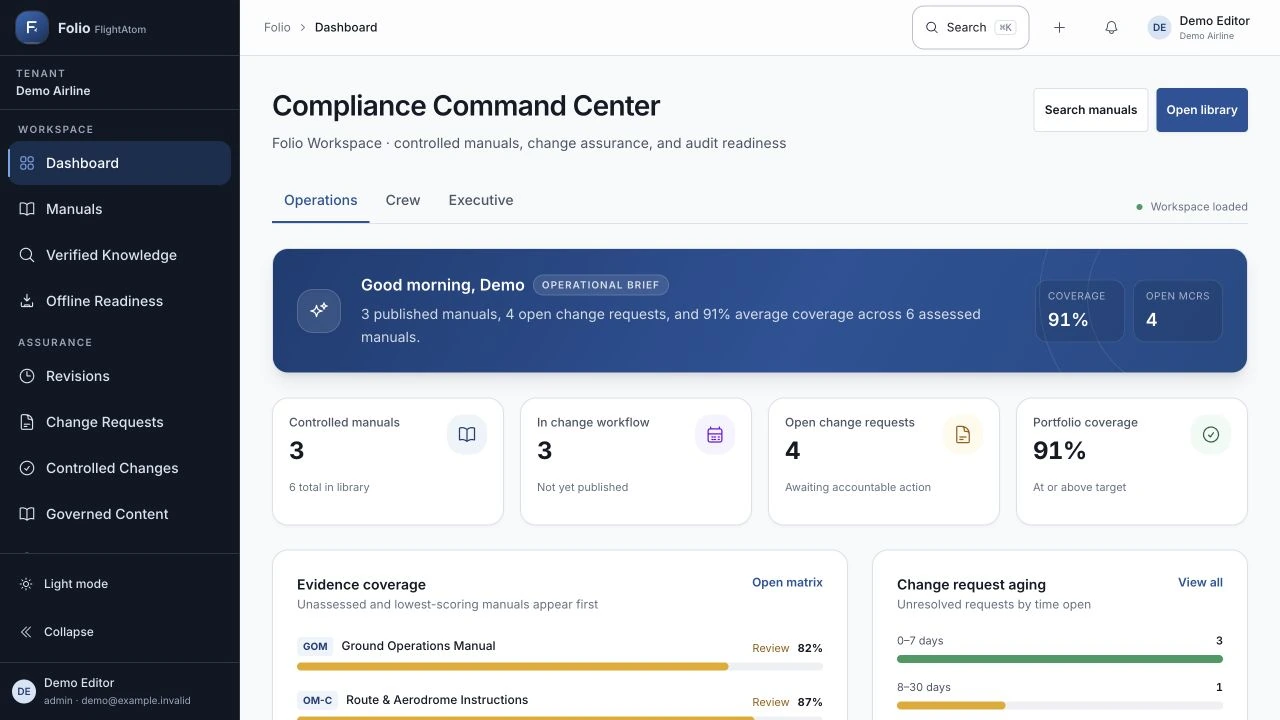
Bring source documents, authors, reviewers, and operational readers into one controlled workspace. FOLIO connects the first draft to the exact release your team receives.
Email me the brochure (PDF · 3.7 MB)Explore the current product interface with demonstration data. Open any screenshot for a closer look.
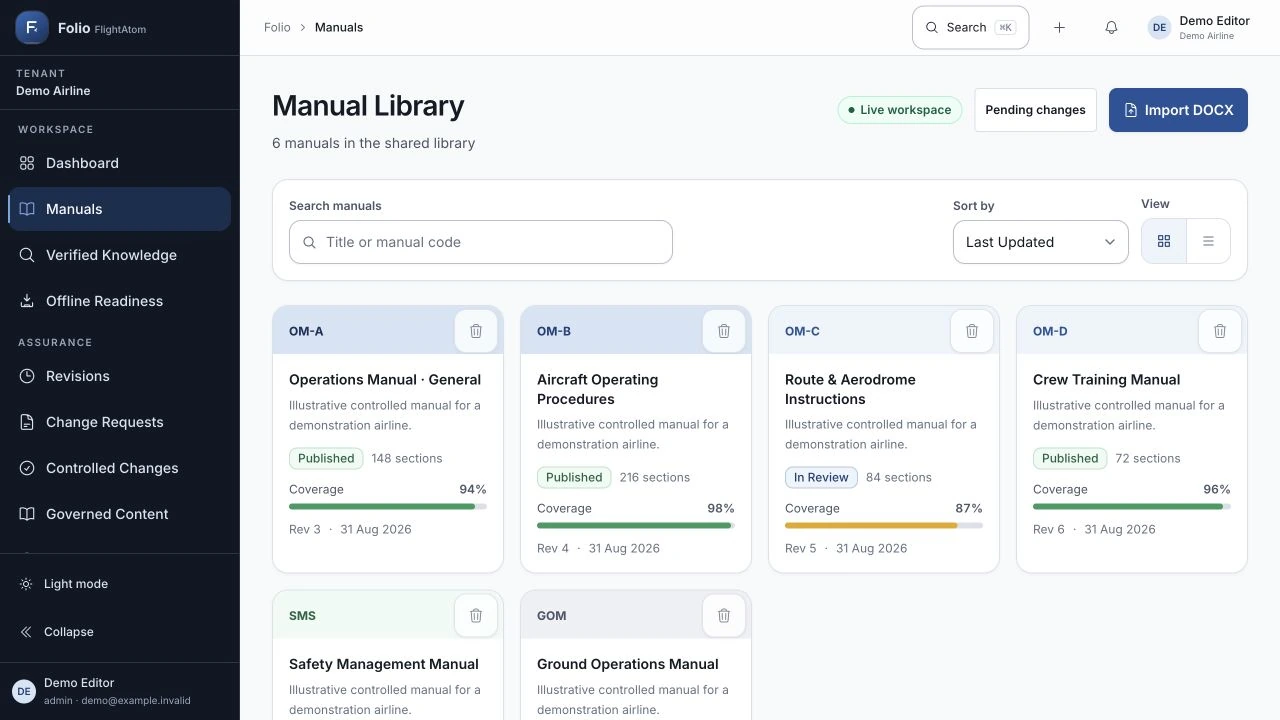
Current application interface with illustrative manual and review data.
Review publication state, revision, section coverage, and change status.
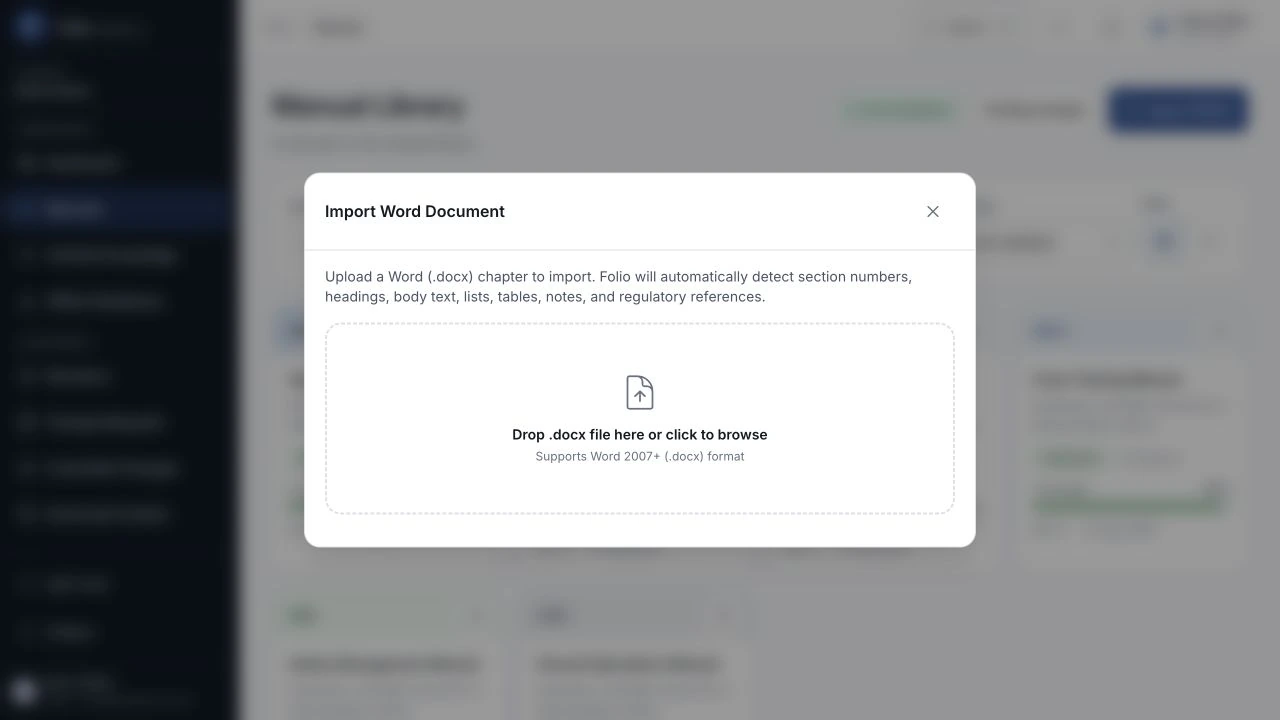
The application's DOCX import workflow detects structure for review.
Controlled authoring, AI-assisted review, approvals, and release evidence.
Bring in DOCX chapters with section numbers, headings, lists, tables, notes, and regulatory references. Review reconciliation findings before accepting the imported structure.
Authors work in private drafts. Submitted proposals freeze the content under review, preserving the connection between the proposed text and the decision that follows.
Configure reviewer pools, separation of author and approver, rework paths, and decision evidence. Workflow versions remain attached to the proposals they govern.
Review section and chapter findings with quoted source text, severity, regulatory references, and suggested changes. Accept, reject, defer, or resolve findings with an accountable record.
Version governed blocks, inspect their consumers, and preview propagation before changing dependent content. Keep each adoption and effective version traceable.
Create controlled releases with signed manifests, frozen content, and recorded release history. Revocation and later revisions remain explicit lifecycle events.
Manage assignments, effectivity, release acknowledgments, and receipts together. Inspect what was assigned and what evidence the reader returned.
Build audit packages and scoped evidence rooms around controlled records. Connect the document, change, approval, release, and receipt in one review trail.
Prepare browser-offline release snapshots and verify their integrity and currentness evidence. The interface exposes expired or insufficient evidence instead of treating a cached file as current.
FOLIO puts assistance inside the document workflow, where a reviewer can inspect the source, assess a finding, and decide what changes.
AI review works against section or chapter content and referenced OTAR material, returning findings that remain linked to the reviewed content.
Suggested fixes and replacement text support the author. Human review and approval remain separate from the model's response.
Verified Knowledge returns extractive evidence from eligible active releases with a signed receipt. It is a source-verification workflow, separate from generative review.
Agree a representative sample and a baseline from your current process. These are proposed evaluation measures, not published performance results.
A complex DOCX manual and a representative change request.
Review the import, draft, independent approval, release, and acknowledgment.
Import corrections; revision cycle time; acknowledgment completion.
Yes. FOLIO has its own manual workspace, tenant access, authoring, review, approval, and release workflows. Aurora is not required to use FOLIO.
FOLIO imports DOCX chapters and detects section numbers, headings, body text, lists, tables, notes, and regulatory references. Reconciliation findings help the document controller review the imported structure.
No. AI returns review findings and suggested wording. Authors and authorized reviewers decide what to apply, approve, and release.
Verified Knowledge returns source excerpts from eligible active controlled releases and a signed receipt binding the response to its evidence. It does not turn an AI answer into an approved operational instruction.
A focused walkthrough, with the people and decisions that matter to your team.