01 / Trace AI
Work through the investigation
Move through preparation, collection, analysis, reconstruction, validation, recommendations, and review while keeping working notes with the record.
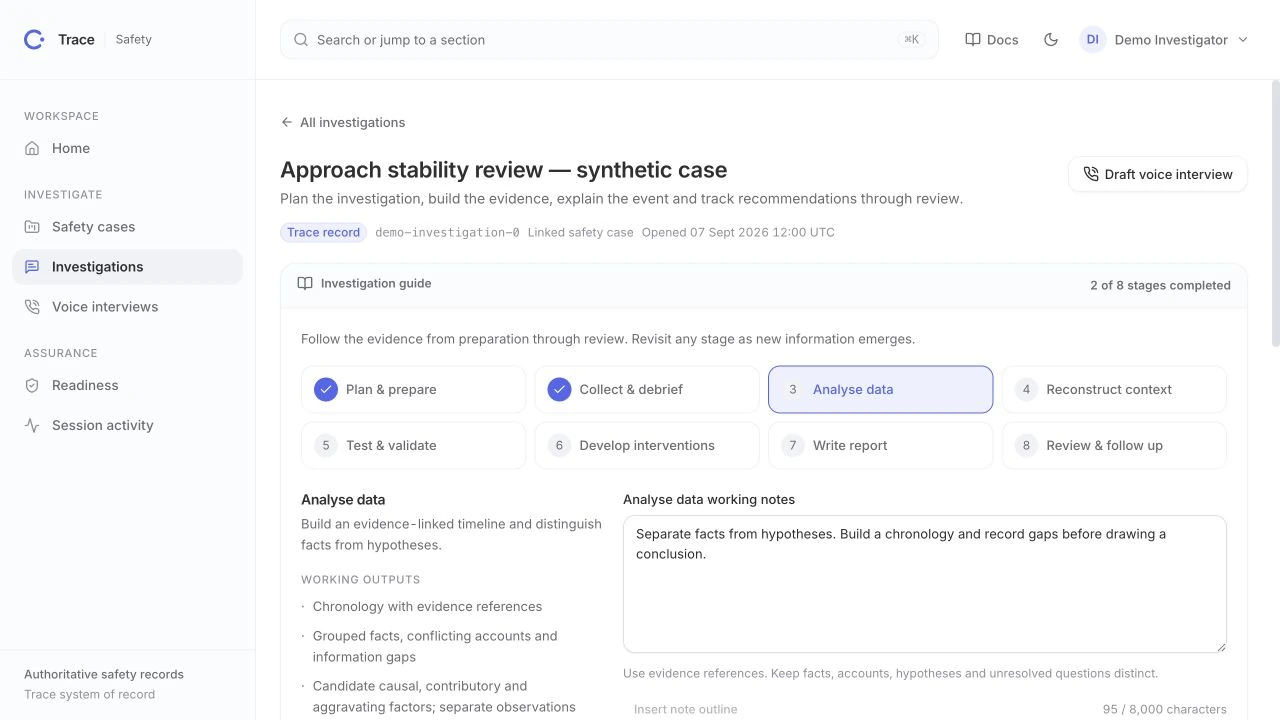
Move from safety case to structured investigation, reviewed interview and evidence-linked recommendations in a standalone system of record.
Email me the brochure (PDF · 4.5 MB)A new occurrence needs an investigation. The investigator has a report, supporting documents, and questions to resolve.
Open the safety case and investigation. Attach the evidence, record working notes, and track outstanding requests.
Prepare and approve the question plan. Record consent, supervise the interview, and review the effective transcript before attaching it as evidence.
Inspect the analysis against its sources and carry the investigation into recommendations and review.
A persisted investigation record with source evidence, reviewed interview material, and a traceable basis for recommendations.
The investigator assesses the evidence, approves the findings, and signs off the investigation.
Explore the current product interface with demonstration data. Open any screenshot for a closer look.
Move through preparation, collection, analysis, reconstruction, validation, recommendations, and review while keeping working notes with the record.
Review recent safety cases, investigations, and interviews in the standalone safety workspace.
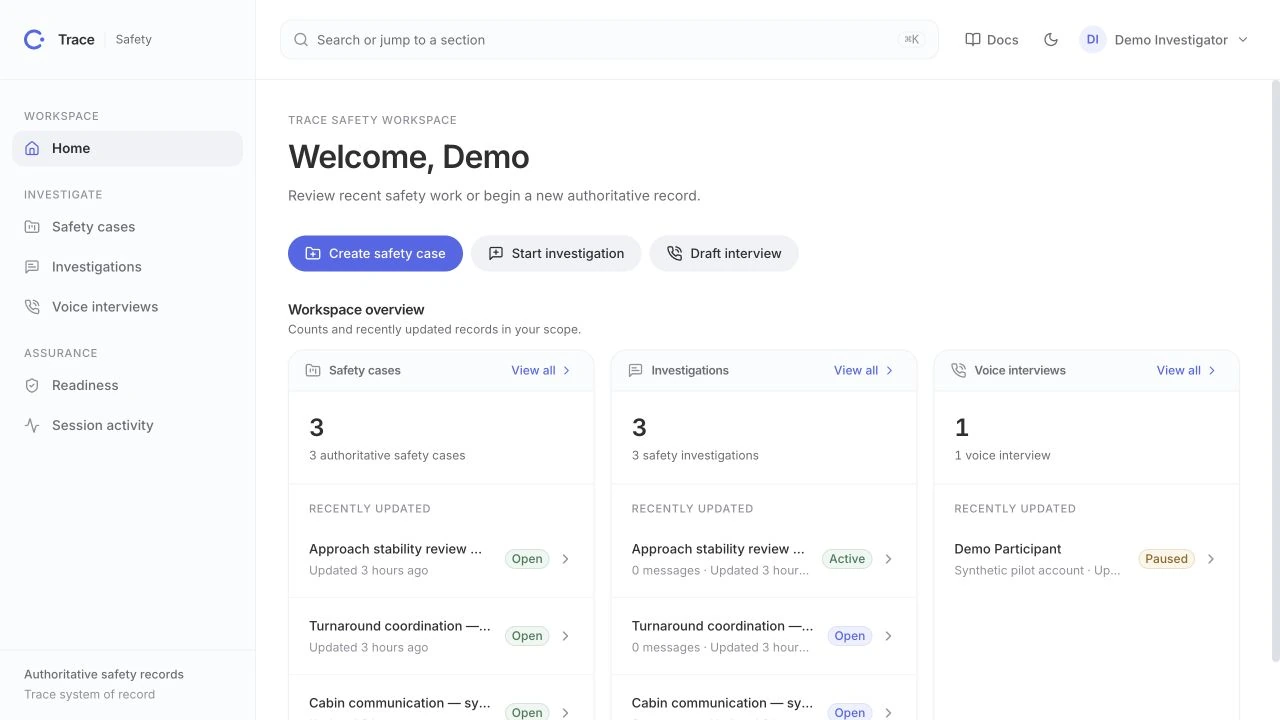
Move from safety case to structured investigation, reviewed interview and evidence-linked recommendations in a standalone system of record.
Create and manage safety cases and investigations in TRACE, with persisted records and version checks that protect concurrent edits.
Follow preparation, collection, analysis, reconstruction, testing, recommendations, reporting and review, returning to earlier work as evidence changes.
Keep stage-specific notes and progress with the investigation while distinguishing recorded progress from approval or sign-off.
Bring documents and supported images into the investigation, review source context and keep outstanding evidence requests visible.
Ask Delphi for investigation assistance while TRACE persists completed messages and the resulting evidence context.
Draft questions from the investigation, review the plan and preserve the approved version before authorizing a voice interview.
Coordinate participant bookings, consent, calls, transcripts, corrections and escalation within the investigation record.
Use role-based access, record encryption, version checks and an audit trail to support controlled safety work.
TRACE uses AI for retrieval and interview preparation while keeping the authoritative safety record and human review in one place.
Delphi supplies stateless retrieval assistance; TRACE retains investigation messages and evidence snapshots as its own records.
Supported document and image workflows make source material available to the investigation without treating uploaded content as approval to act.
Interview questions, contact authorization and participant consent bound the voice workflow. Investigators remain responsible for findings and sign-off.
Agree a representative sample and a baseline from your current process. These are proposed evaluation measures, not published performance results.
A representative closed case with permission to use its evidence.
Rebuild the evidence trail and review interview material and recommendations.
Investigator preparation time; missing evidence; reviewer corrections.
No. TRACE is a standalone safety application that owns its safety cases, investigations and interview records.
TRACE sends bounded investigation context to Delphi for stateless retrieval assistance, then preserves the resulting answer and evidence in TRACE.
No. Human investigators review the evidence, decide conclusions and own sign-off. AI assistance and draft questions remain subject to that review.
The workflow requires authorized contact, a reviewed and approved question plan and participant consent, with interview records, corrections and escalation support.
A focused walkthrough, with the people and decisions that matter to your team.