Capabilities
From first application to the training roster.
One candidate record carries the pilot's profile, every assessment result with its proctoring evidence, interviews, onboarding and training milestones.
Know which remote test results to trust
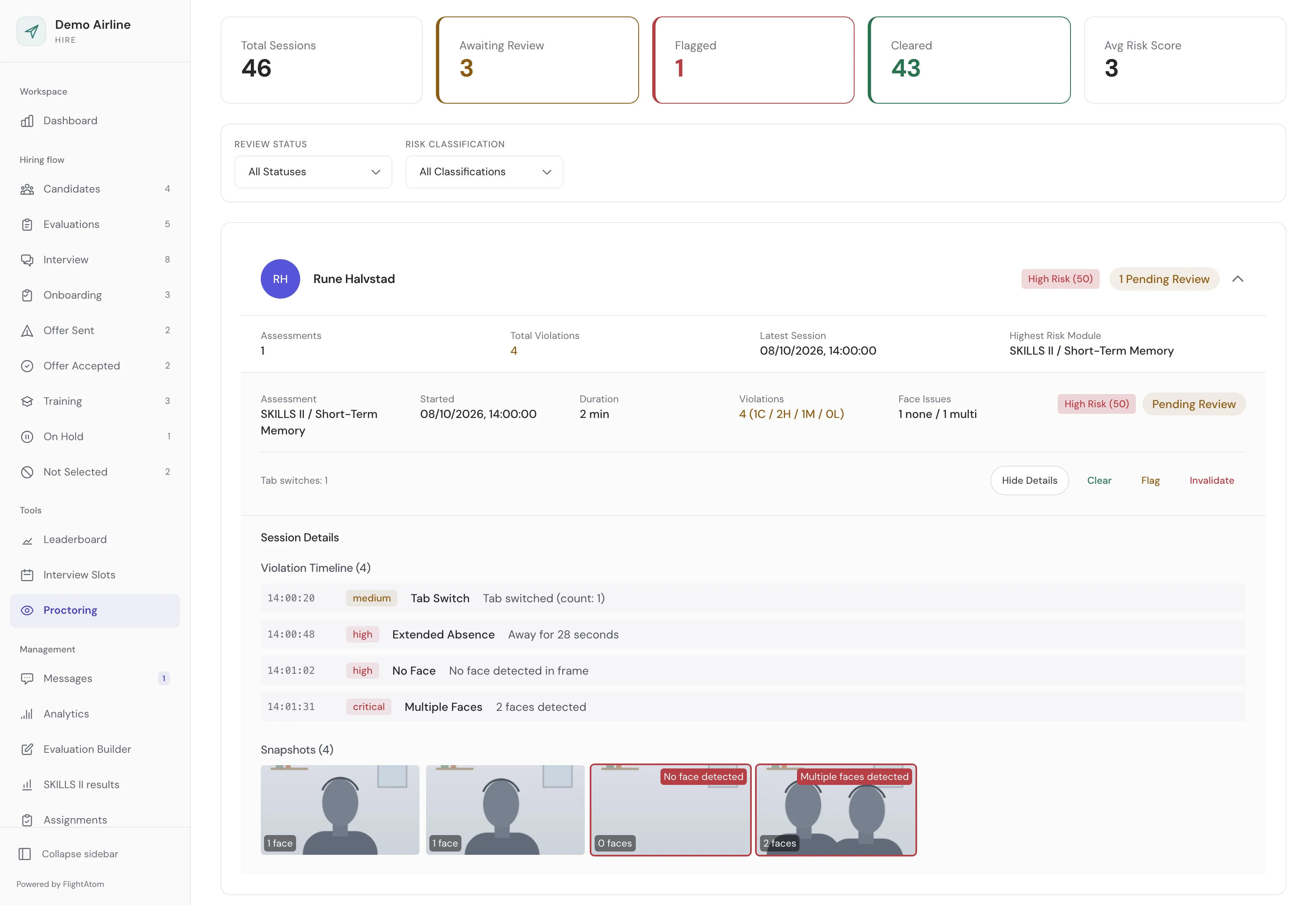
Every assessment module runs under proctoring, and a module cannot be submitted without a completed proctoring session. Violations are weighted into a 0-100 risk score that marks each session cleared, pending or flagged, and flagged sessions alert administrators. A reviewer can clear, flag or invalidate a session, which voids that module's score, and when a retake is justified an administrator can reset or reopen a single module.
Start with a ready-made aviation battery
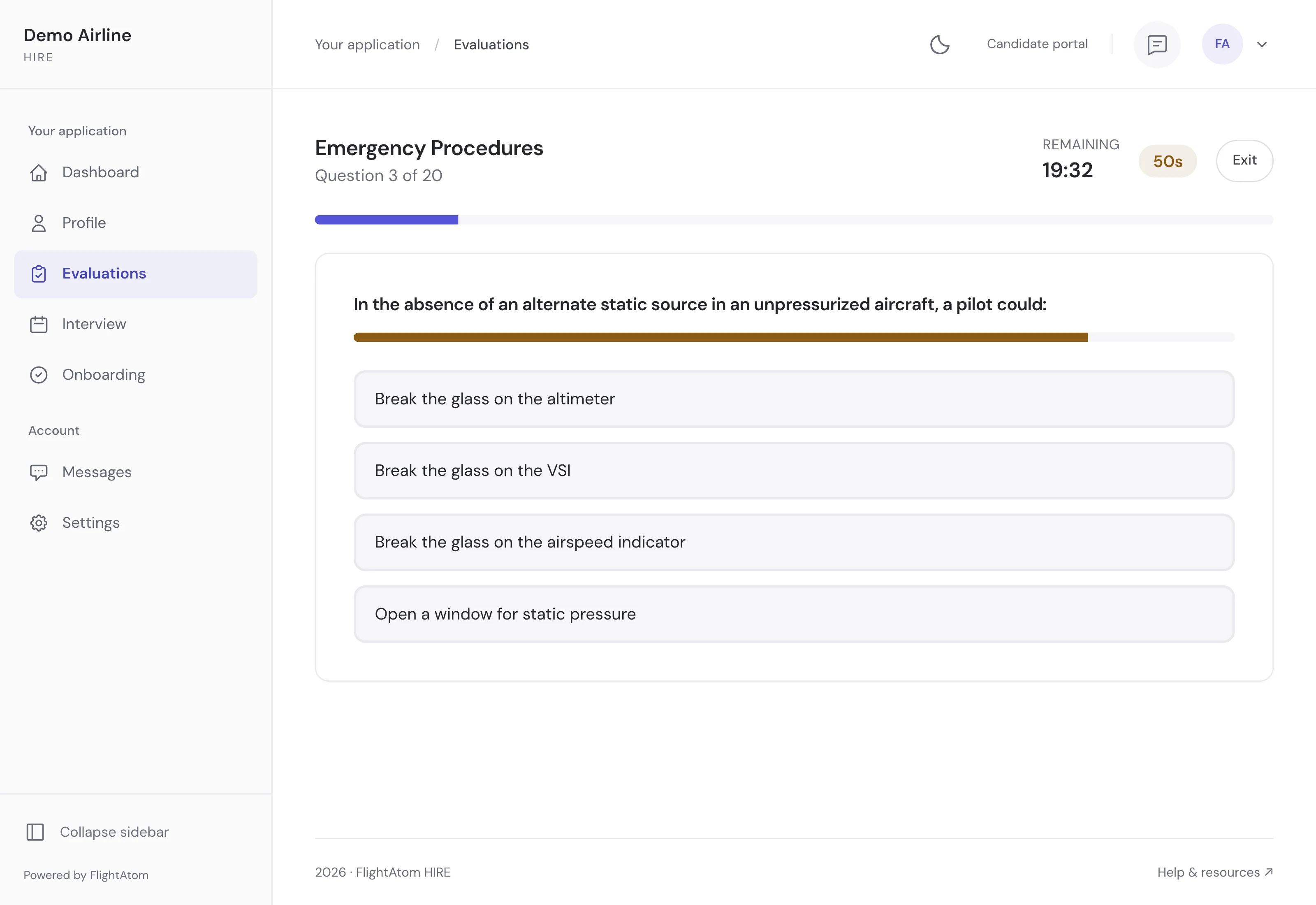
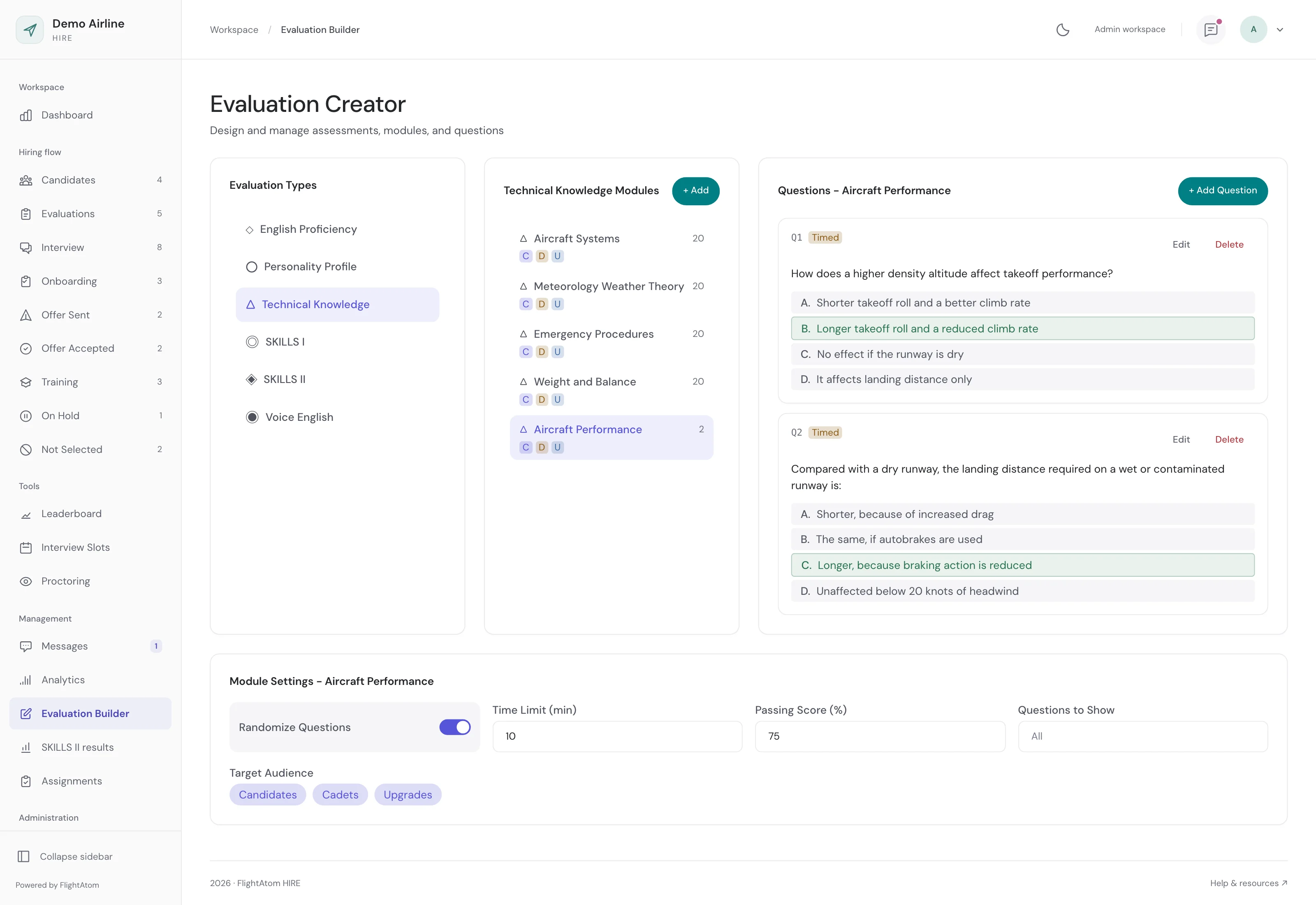
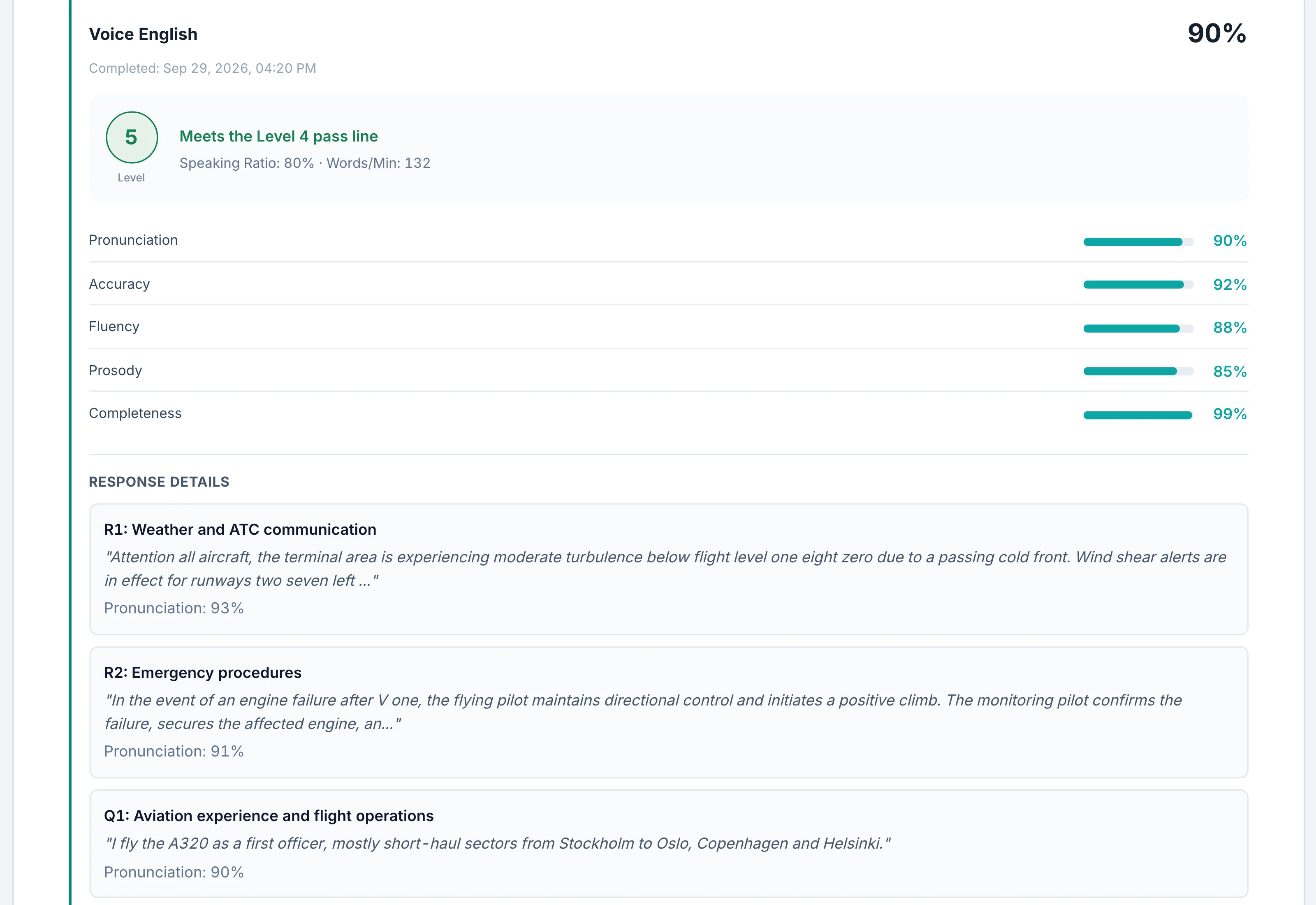
Assign aviation English (communication, terminology and reading comprehension), cognitive tests (numerical reasoning, spatial awareness, decision making and attention) and technical knowledge timed question by question (aircraft systems, meteorology, emergency procedures, and weight and balance), with question order shuffled for each session as standard. Pilot candidates, cadets, and upgrade and type-rating pilots each see the modules set for their group, and an individual pilot can be given a specific set of modules instead. Administrators can also add their own modules and questions.
Brief the interview panel with the gaps flagged
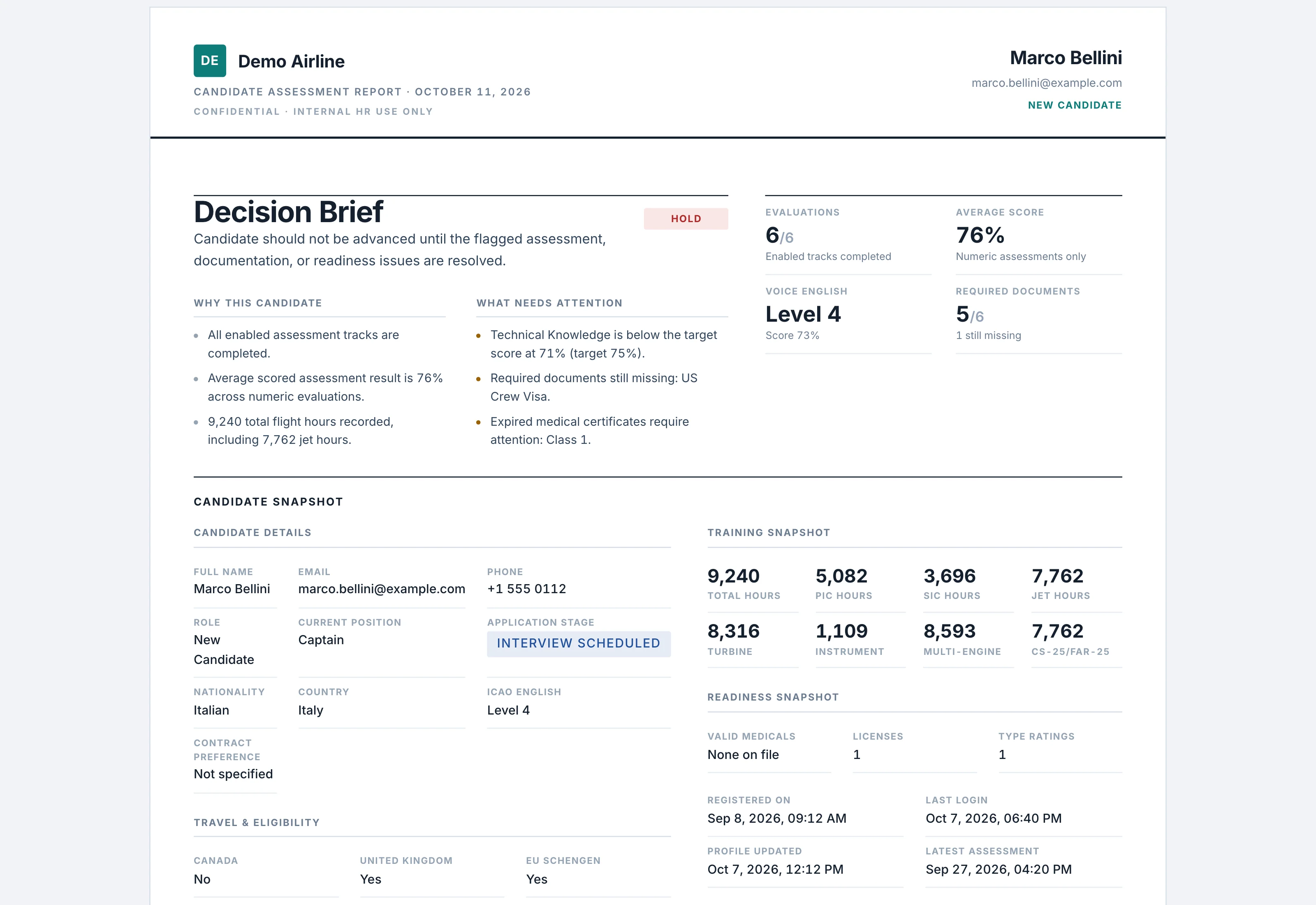
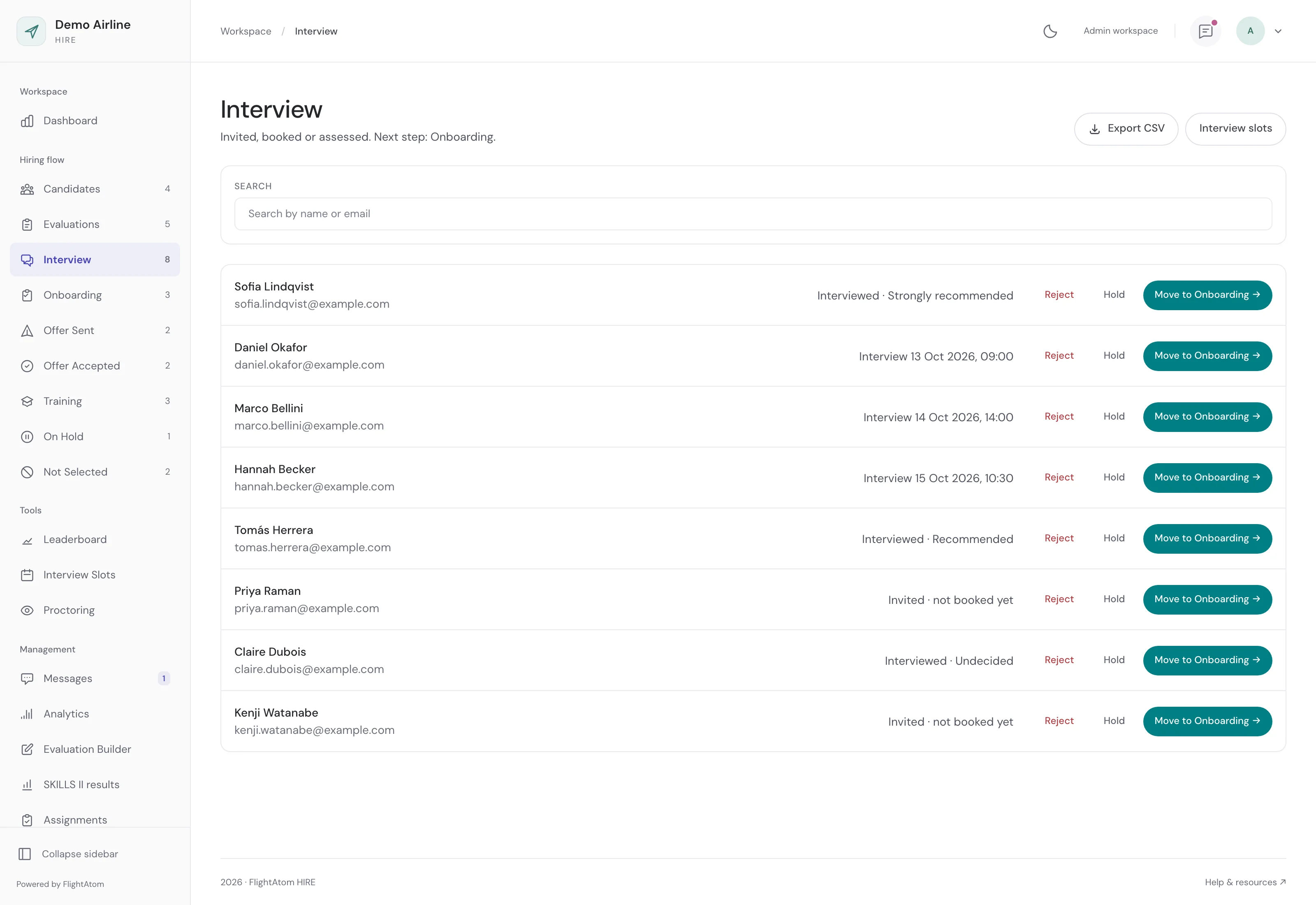
A one-click printable report brings qualifications, flight hours, assessment results, interviews and documents together. Rules-based checks flag below-target scores, Voice English below Level 4, work-style follow-up points, missing documents and expired medicals, and suggest Strong Yes, Review or Hold with a next step. Recruiters publish interview slots that invited pilots book, cancel or reschedule on their own.
Move pilots through a seven-stage hiring flow
Candidates, Evaluations, Interview, Onboarding, Offer Sent, Offer Accepted and Training, with a CSV export for every stage and status changes for up to 500 candidates at once. On Hold pauses a pilot silently and resumes them where they left off. Not Selected cancels upcoming interviews, records a reapply date one year out and lets the recruiter send a decline letter, and a declined pilot can be reopened at the stage they left.
Carry each hire from onboarding to validation
Pilots complete an onboarding portal covering identity, work authorisation, travel documents, relocation and training preparation, and HR can send it back with requested changes. HR's checklist runs from licence, medical and LPC verification through background and reference checks to the signed contract, and onboarding cannot be completed until every item is finished, the required documents are uploaded and a joining date is set. Hired pilots then move onto a roster where recruiters record milestone dates from contract through simulator training, safety and CRM courses to final validation, with each pilot's next milestone shown.
Measure aptitude with SKILLS II
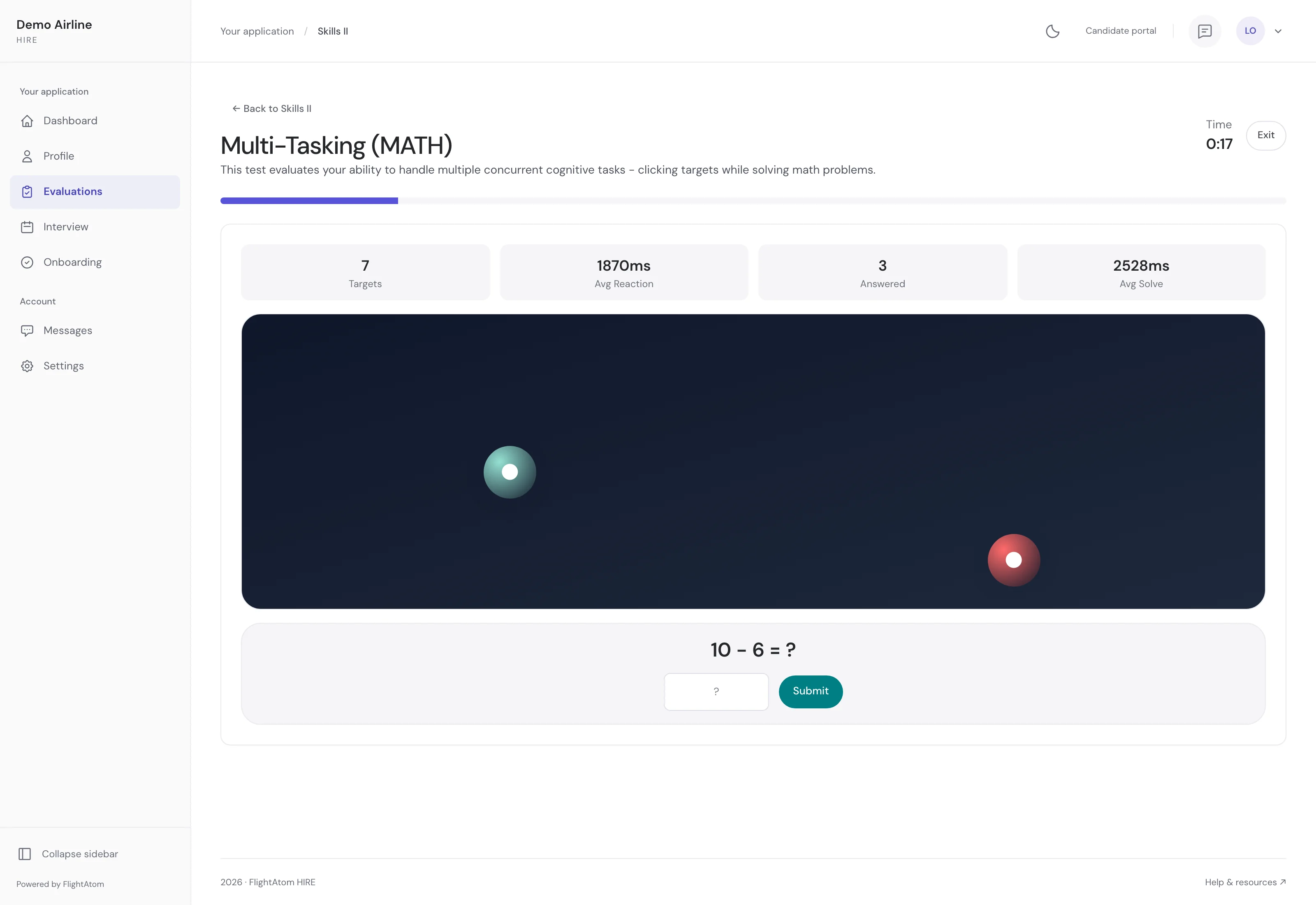
Six timed, game-style tests measure hand-eye coordination tracking, multitasking, short-term memory, mental calculation, pattern reasoning and verbal reasoning. They work with a mouse or a touch screen and run inside the same proctored workflow as every other module.
Collect a pilot-specific profile
Applicants record licences and restrictions, type ratings, medicals, a flight-hours breakdown (PIC, SIC, multi-engine, turbine, jet, night, instrument and recent experience), employment, references and documents. Their portal shows progress and the next step, and lets them book interviews and message the recruiting team. The careers site and portal carry the operator's own name, logo and colours, with a public FAQ the team edits.
See how a pilot works in a crew
A work-style questionnaire gives recruiters CRM-relevant strengths and follow-up points, such as speaking up, cooperation, caution and procedural discipline, to explore at interview. It has no pass mark, and its follow-up points carry into the candidate report.
Keep the recruiting team in step
Candidate messages arrive in a shared inbox with acknowledgement, recruiters keep internal notes the candidate never sees, and each administrator chooses which events trigger an alert. Email templates can be edited and previewed, with a delivery log. Analytics chart the status mix, pass rates against each assessment's pass mark, flight-hours distribution and application trends, and a leaderboard ranks pilots in each applicant group by the average of their English, cognitive and technical scores.